
Developing Design Mindset Through Method Usage
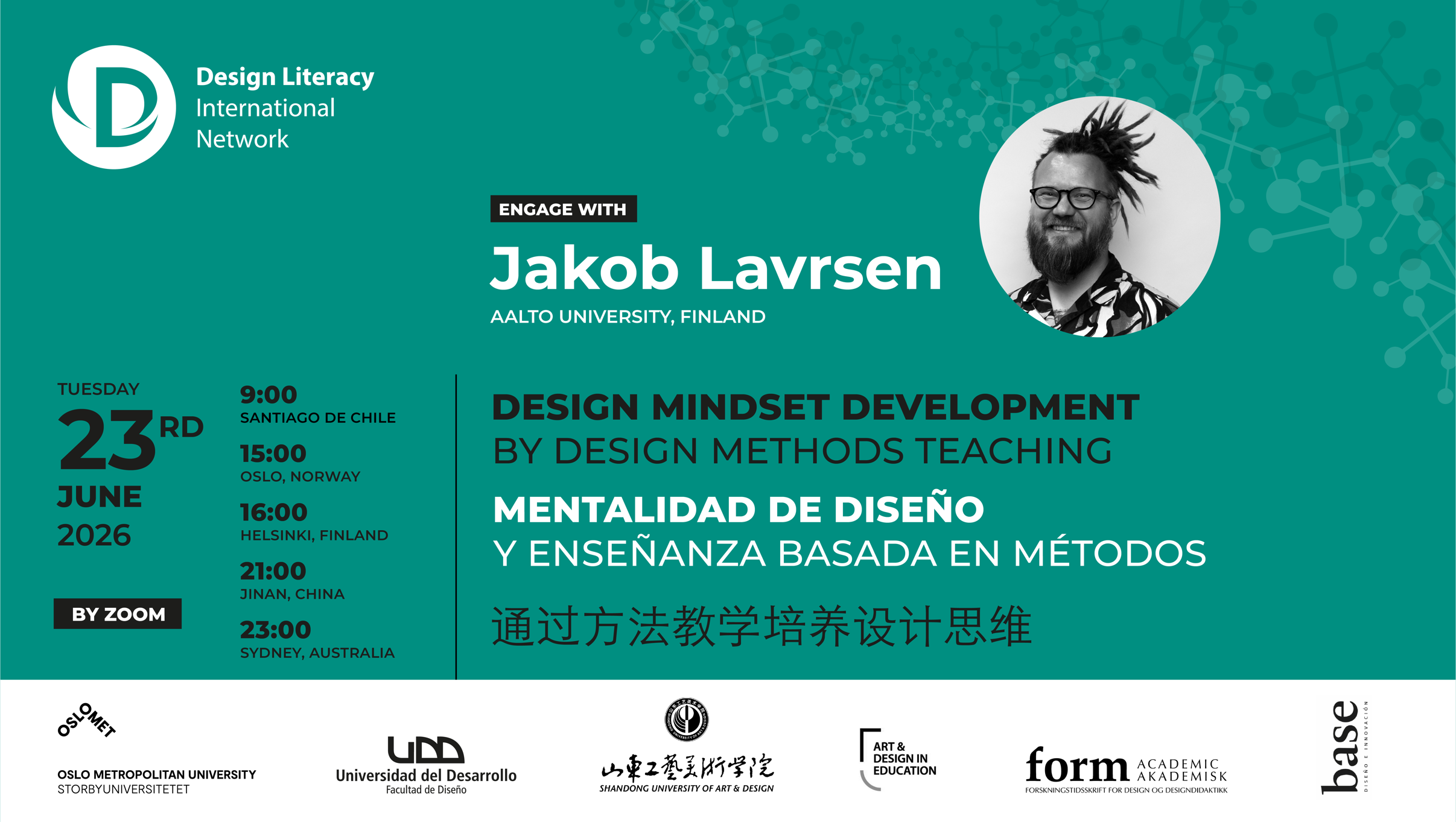
In the upcoming talk, Jakob Clemen Lavrsen will present his ongoing research on design methods and their role in developing design practices and mindset (Lavrsen, Carbon, & Daalhuizen, 2025).
In his talk titled Developing Design Mindset Through Method Usage, Jakob will propose that the development of a design mindset can be facilitated by Method Teaching, where project-based learning is scaffolded by the use of design methods, guiding students’ actions, stimulating reflection in and on action and, thus facilitating the development of a Design Mindset.
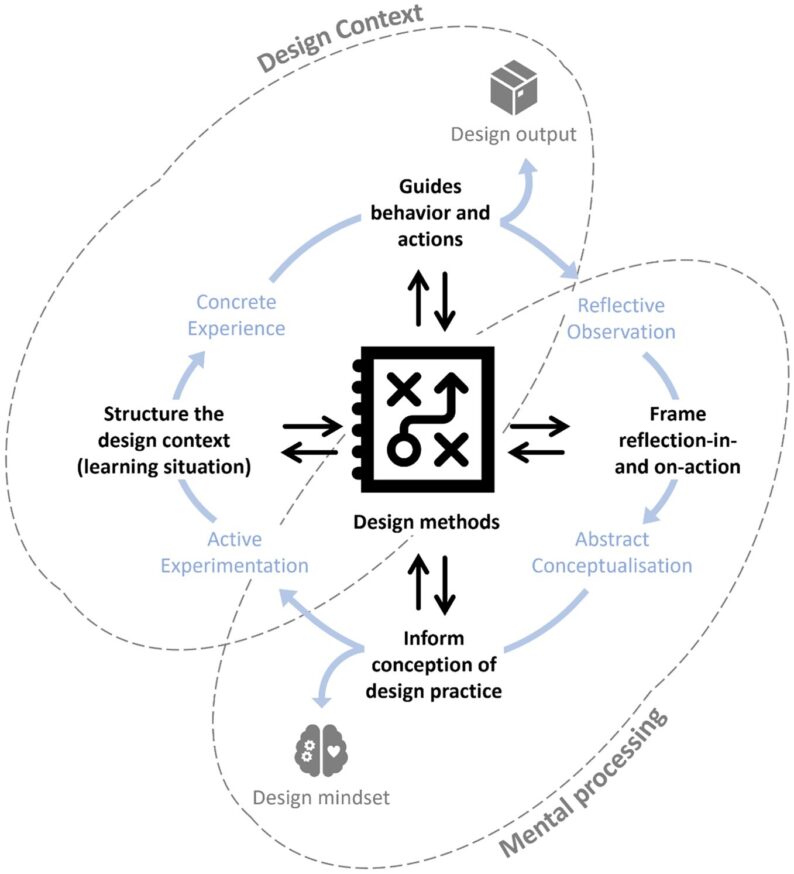
Tom and David Kelley (2013), from IDEO and Stanford d.school, in their book titled Creative Confidence: unleashing the creative potential within us all, suggested that anyone can learn to develop a Creative Mindset. They proposed that the Creative Mindset “allow[s] us to innovate in terms of how we approach and solve problems”. Lavrsen, Carbon and Daalhuizen (2024) defined the Design Mindset as “the beliefs and attitudes determining the interpretation and understanding of design situations and the choice of appropriate design activities.” (p. 3) Thus, as with the Creative Mindset, the Design Mindset can also be learned.
To measure Design Mindset, Jakob has developed the Design Mindset Inventory. In an article titled: Measuring design mindset: developing the Design Mindset Inventory through its relationship with ambiguity tolerance, self-efficacy and sensation-seeking, with his co-authors, he outlined the evolution of the Mindset Inventory (Lavrsen, J. C., et al. 2024), which is illustrated in the table below.
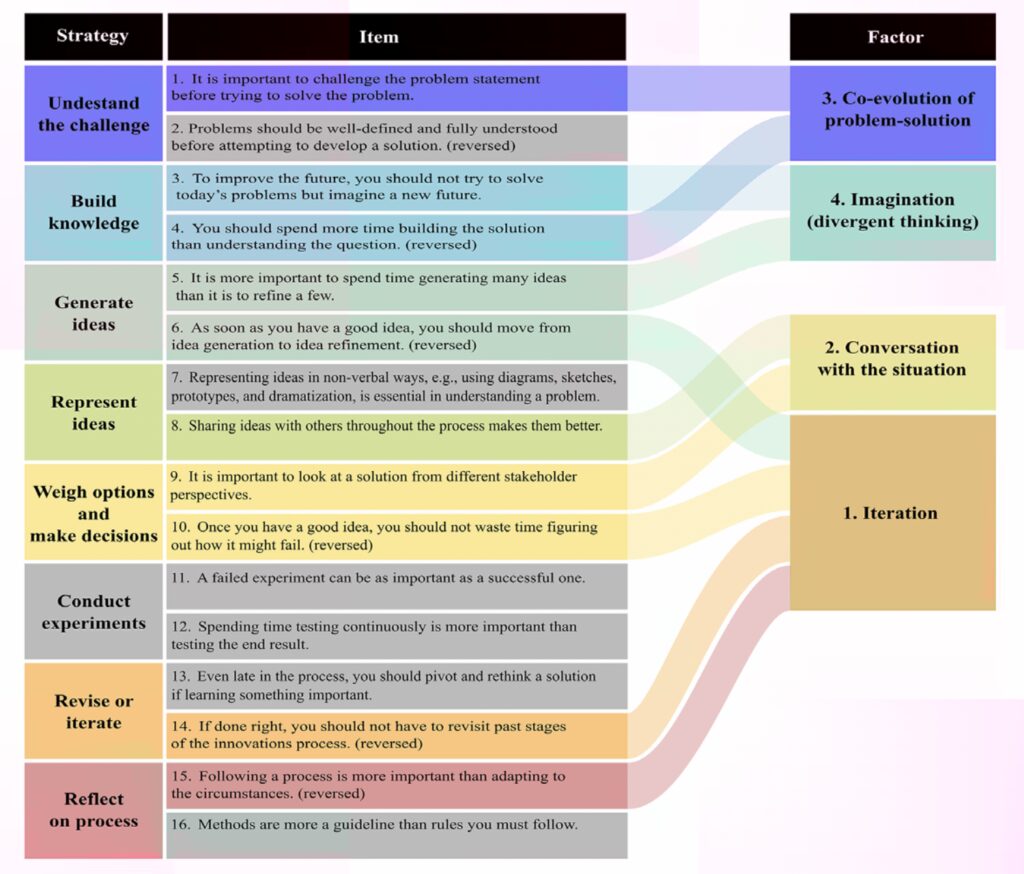
The Design Mindset Inventory is structured around values-statements to capture attitudes and beliefs related to core design practices and have been related to well-established constructs associated with design practice like ambiguity tolerance and self-efficacy.
The current Design Mindset Inventory survey version is available for free on this link: https://link.webropolsurveys.com/S/2263681E4C0B8D8A
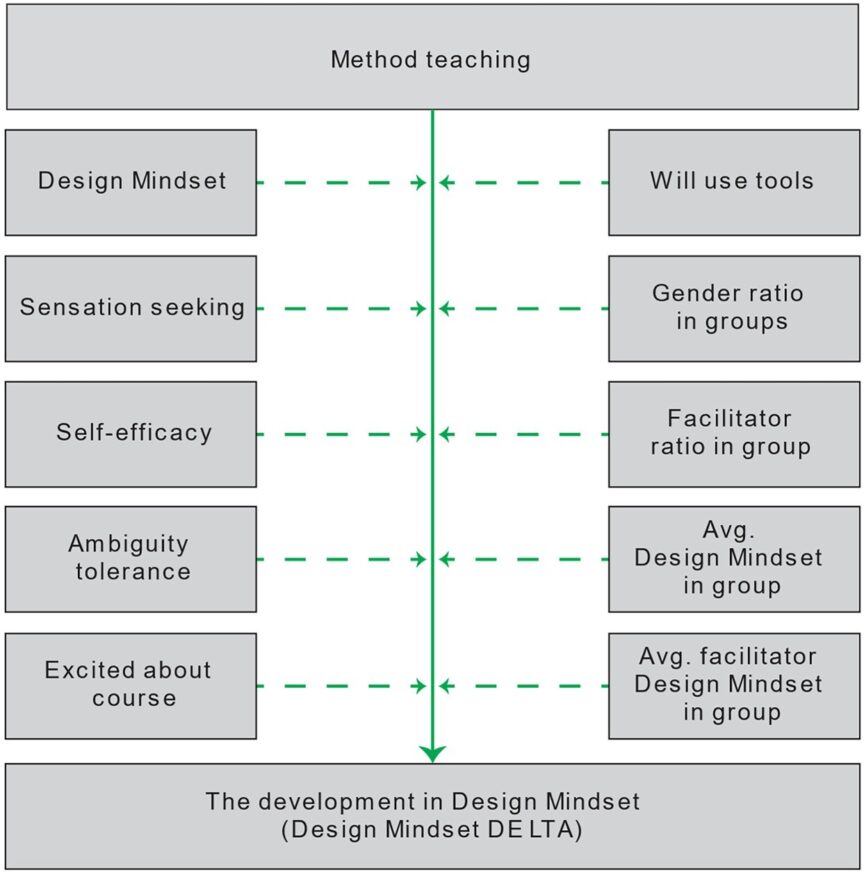
To test the connection between method teaching and design mindset, he collected data from over 250 engineering master level students who participated in three weeklong design studio projects, structured around method teaching.
The data shows that the design mindset generally improved as a result of the design studio classes. However, this positive development was mainly driven by students scoring lower on the pre-test, while those students who scored high in the pre-test saw lower or even negative development as evident in the negative relationship between the pre-course mindset and the post-course mindset scores on the Design Mindset Inventory. While partly related to ‘regression to the mean’ this suggests that the course failed to trigger the necessary reflection on action to stimulate development of the Design Mindset.
The study also found that individual traits–like ambiguity tolerance and self-efficacy–were more influential in the development of design mindset than contextual ones like group composition and mindset level of the student facilitators.
Together, these findings highlight the complexities of design education and developing a design mindset, and suggest that as the design mindset develops, design educators might need to modify teaching strategies to stimulate continued development of the Design Mindset for all participating students.
Event recording in ENGLISH:
Event recording in SPANISH:
 Jakob is a postdoctoral design researcher at Aalto University in Finland. He specialises in design methods, design cognition, and innovation processes. His research explores how design methods help people think and act like designers with a focus on how method usage influences cognition, cognitive load, and the development of design practices. https://www.aalto.fi/en/people/jakob-clemen-lavrsen
Referece
Lavrsen, J. C., et al. (2024). “Measuring design mindset: developing the Design Mindset Inventory through its relationship with ambiguity tolerance, self-efficacy and sensation-seeking.” Design Science 10: e48. https://doi.org/10.1017/dsj.2024.36
Lavrsen, J. C., et al. (2025). “Developing design mindset: how individual and contextual factors influence the development of design mindset through method teaching.” Journal of Engineering Design 36(3): 325–354. https://doi.org/10.1080/09544828.2024.2419316
Kelley, T. and D. Kelley (2013). Creative confidence: unleashing the creative potential within us all. New York, Crown Business.
Bookings
Bookings are closed for this event.